

Problem Space
Aims
Pause
An application for women to track and manage symptoms of perimenopause and long covid.



Project Overview
PAUSE emerged as a health management app, designed to help women track and manage symptoms of Perimenopause and Long-Covid. We defined the initial problem space through secondary research (literature review, anecdotes, forums) and collated information via an Affinity Diagram to define general objectives of PAUSE.



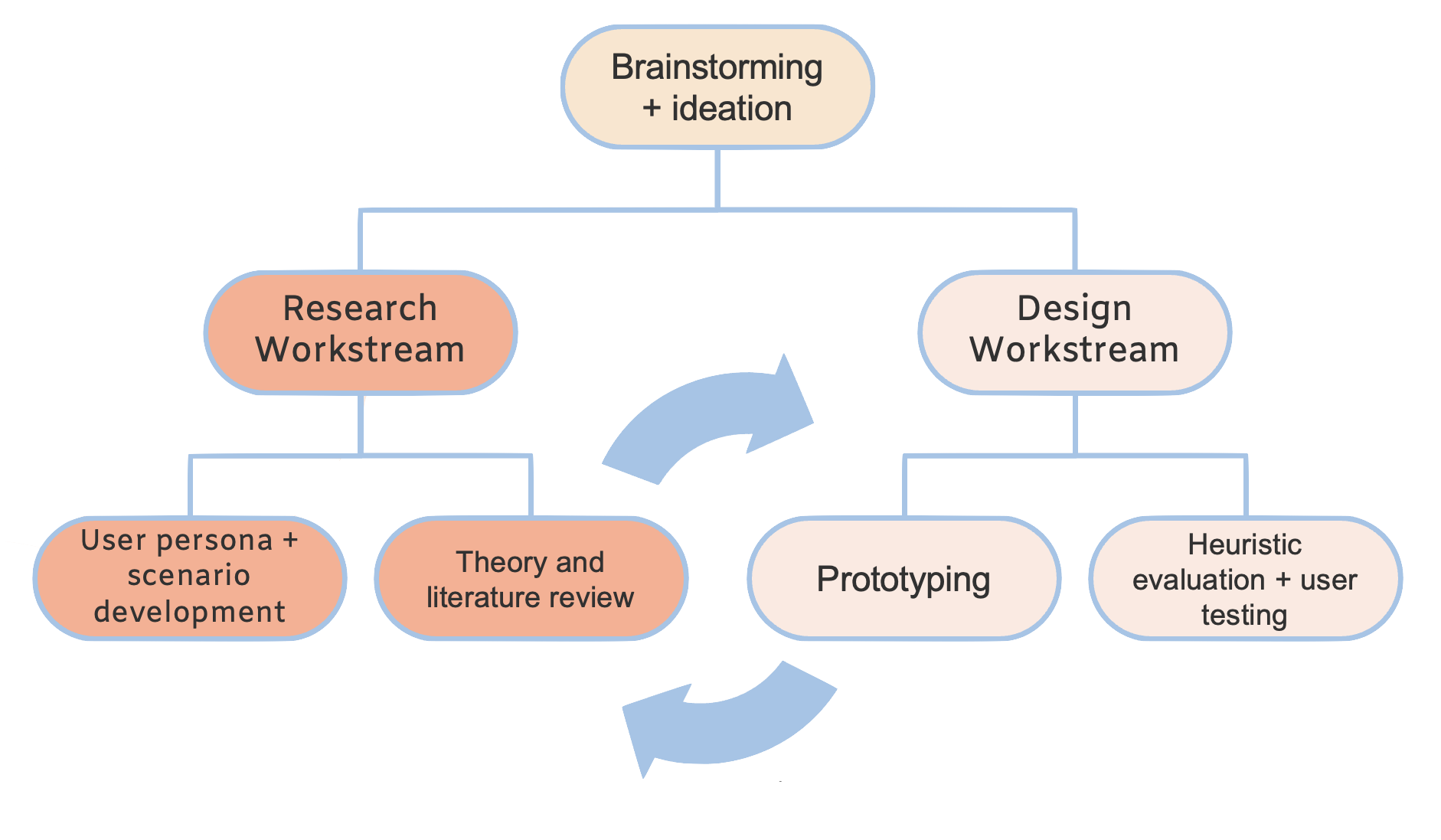
The team was split into two interdependent work-streams. I was a part of the Design team, tasked with app design, including system designs, wireframe prototyping, and user testing. Meanwhile, the Research team undertook additional research to generate design deliverables and provide design guidance.
User Research — Personas & Scenarios
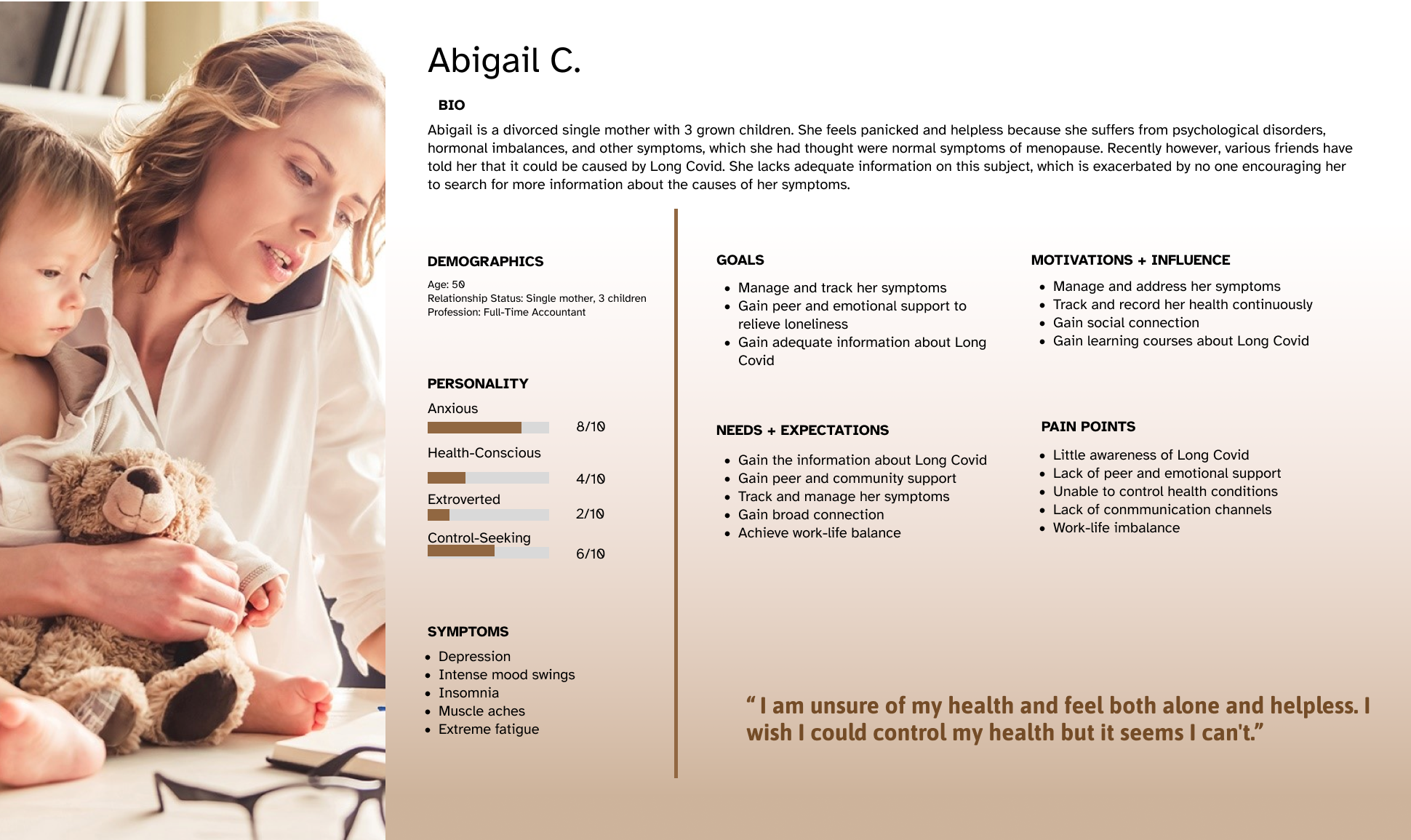
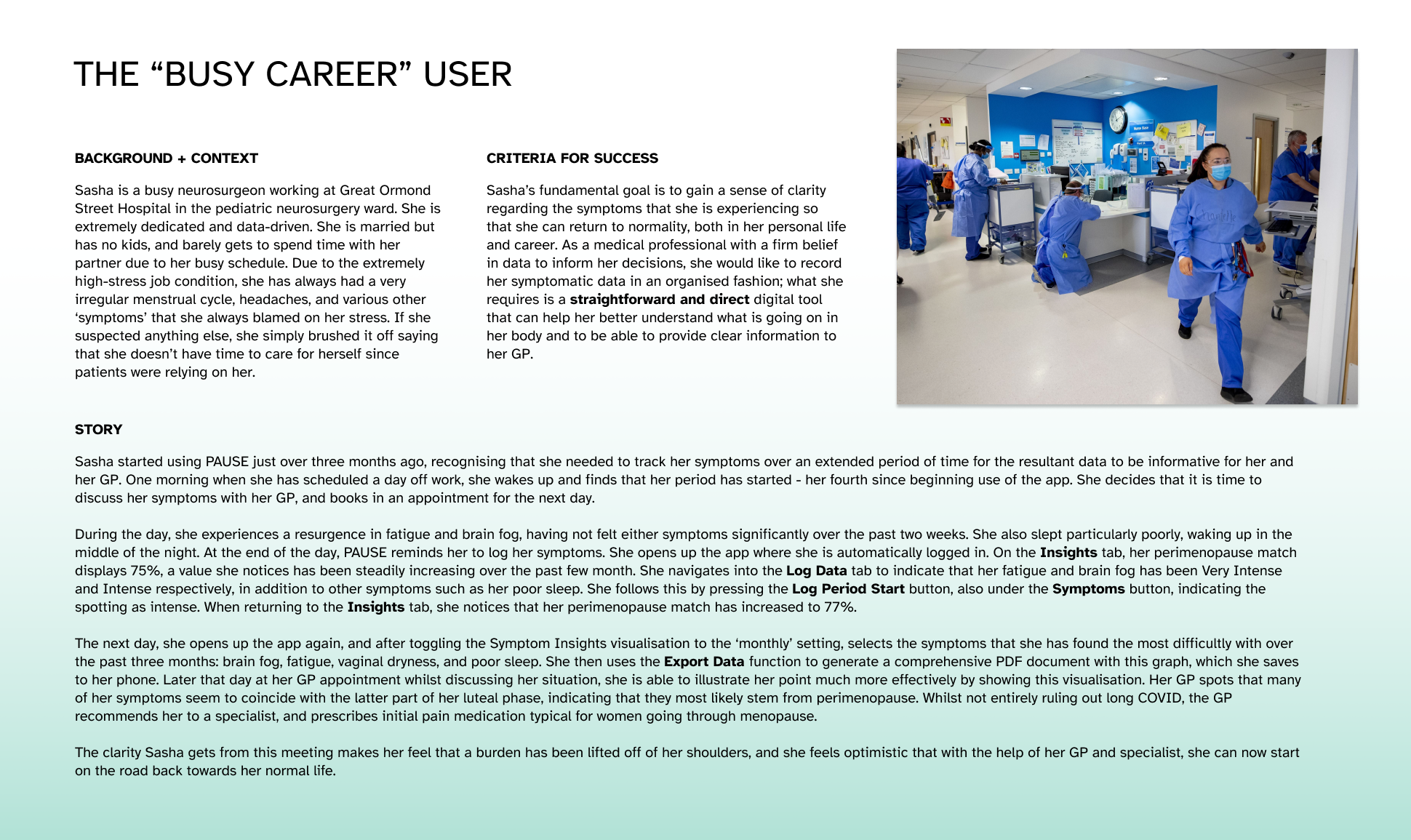
The Research Team conducted further secondary research on the symptoms, goals, pain points and user needs of women suffering from Perimenopause, Long-Covid, or both conditions. Codes and themes were emerged from research findings via Affinity Mapping.
3 Personas and Scenarios representing the target user group of PAUSE were developed based on finalised themes and codes.



Design Research — User Requirements
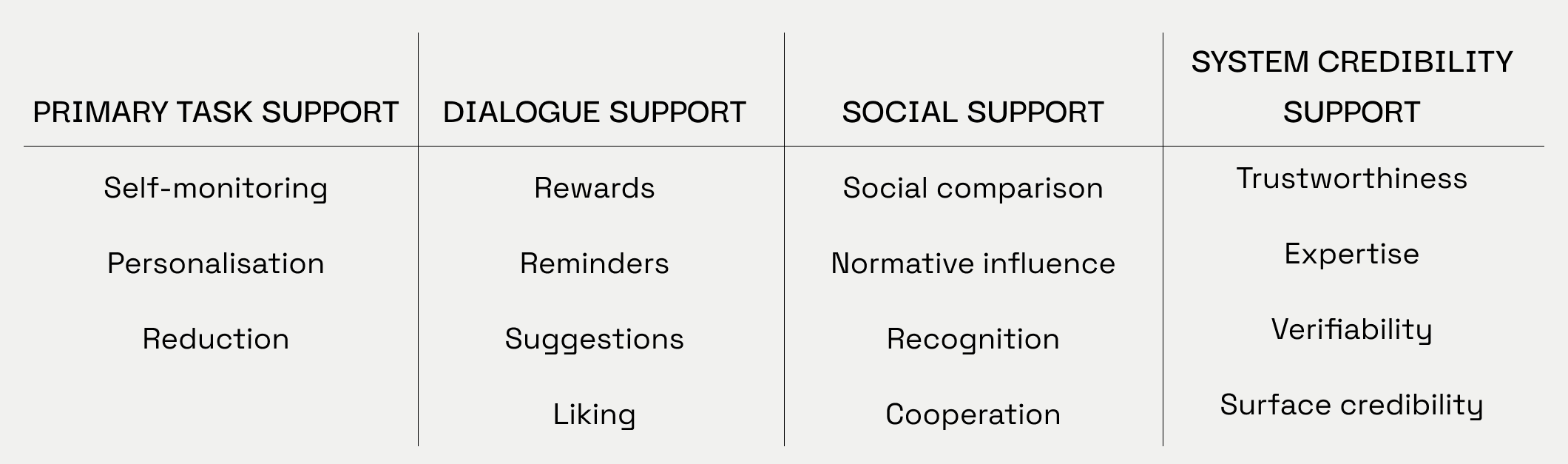
The Persuasive System Design Model (PDSM) was employed to guide system design decisions, which provided specific system design recommendations that maximises the effectiveness of each in-app task support intervention.
System Design Features of PAUSE
The entire group brainstormed low-fidelity sketches for each task support intervention through Crazy 8s design sprints. Potential features of PAUSE were assessed in a bubble evaluation matrix, which aided the development of the final set of user requirements.

USER REQUIREMENTS
A detailed yet user-friendly symptom, activity, nutrition, and menstrual cycle tracking tool.
Clear data visualisation of the user’s health progress that can be exported and shared.
Personalised and customisable notifications that encourage the user to regularly input health data.
A community feature that allows users to interact and connect with other women with similar lived experiences.
Educational resources retrieved from validated empirical sources that are provided in an interactive and accessible format.
Wireframe Prototyping
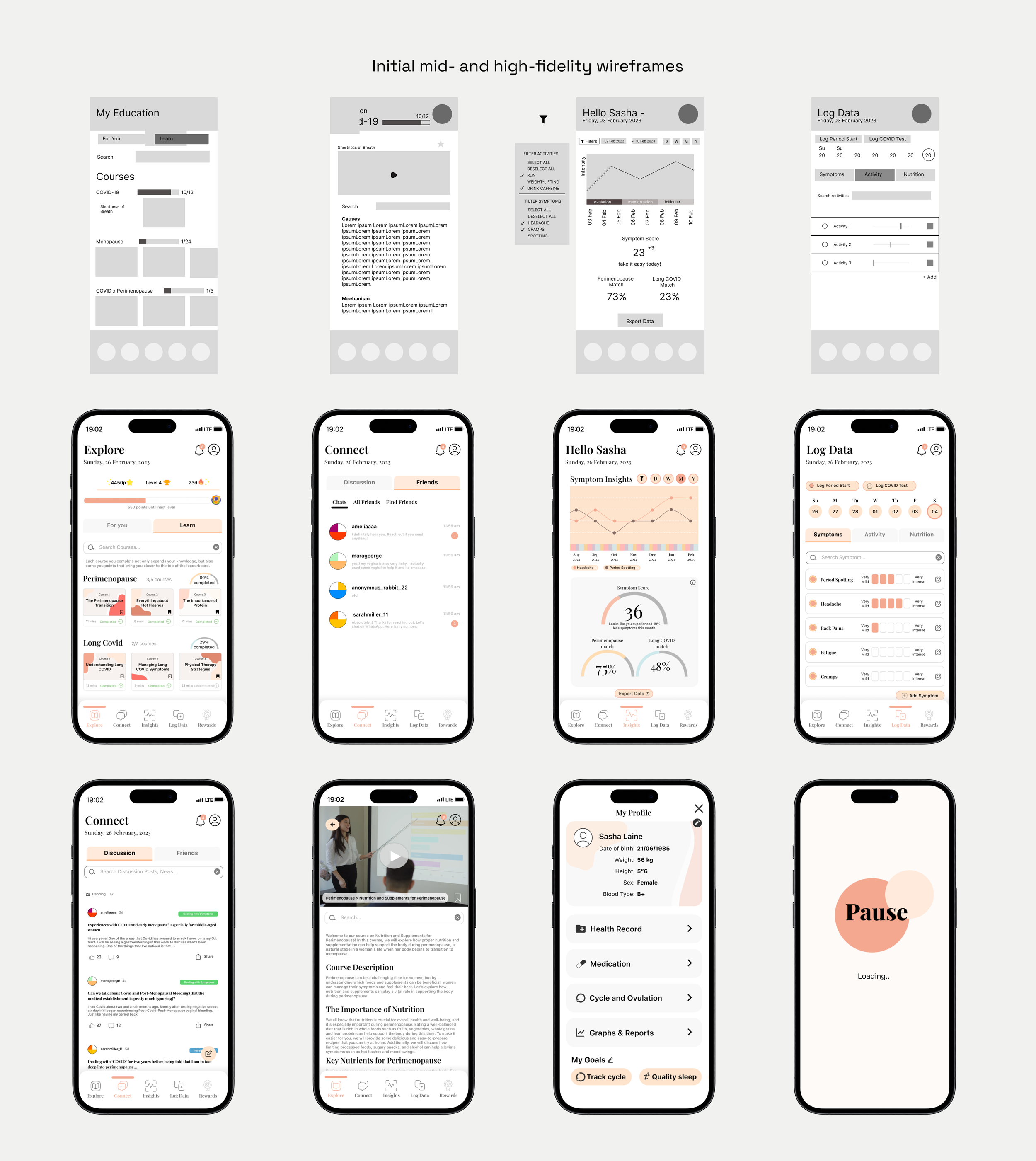
The design team created mid-fidelity wireframes before proceeding to high-fidelity functional prototypes of PAUSE on Figma. I was responsible for the “Insights” and the “Personal Information” screens, while my colleagues worked on the “Explore”, “Connect”, “Log Data”, and “Rewards” tabs.
User Testing
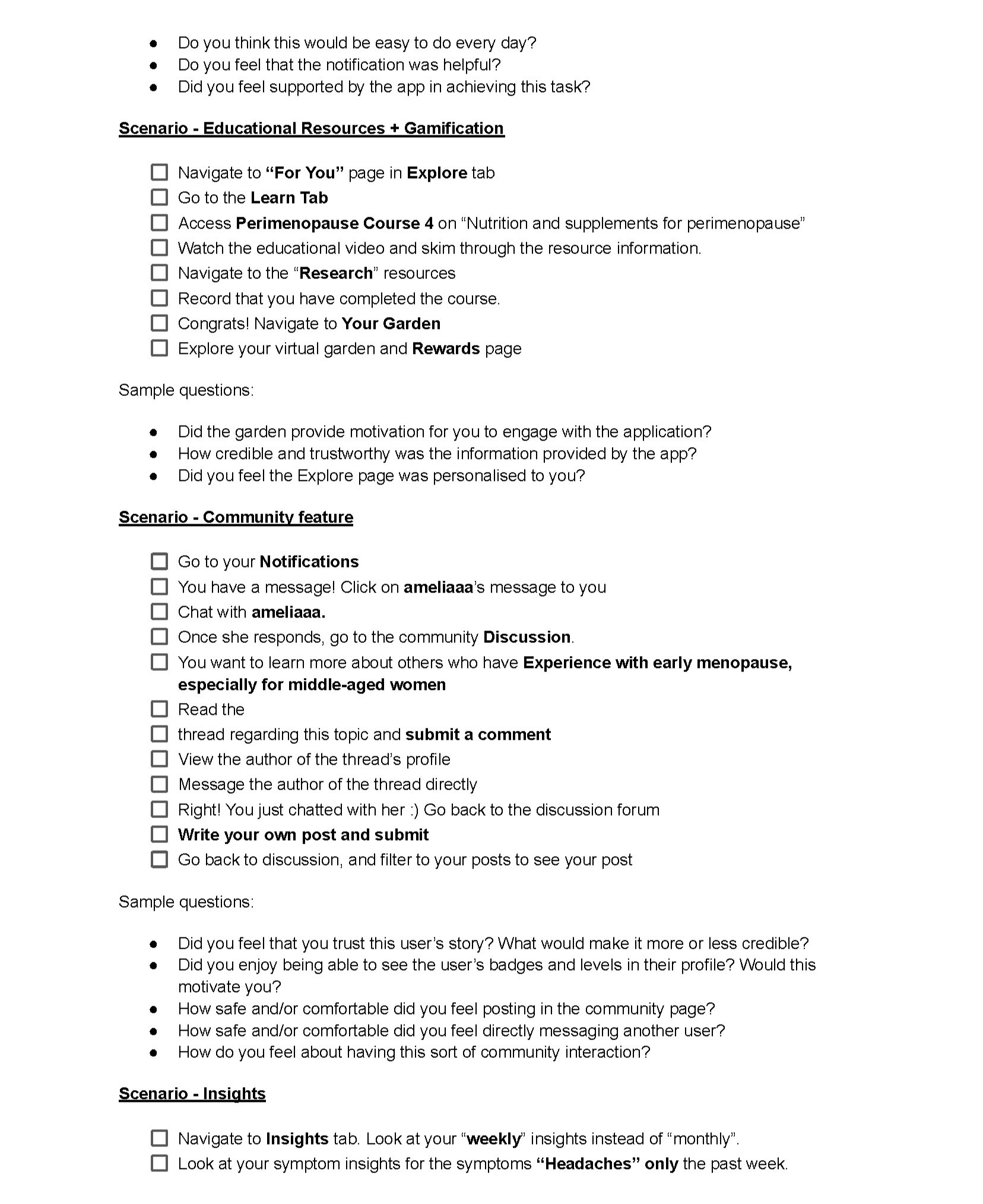
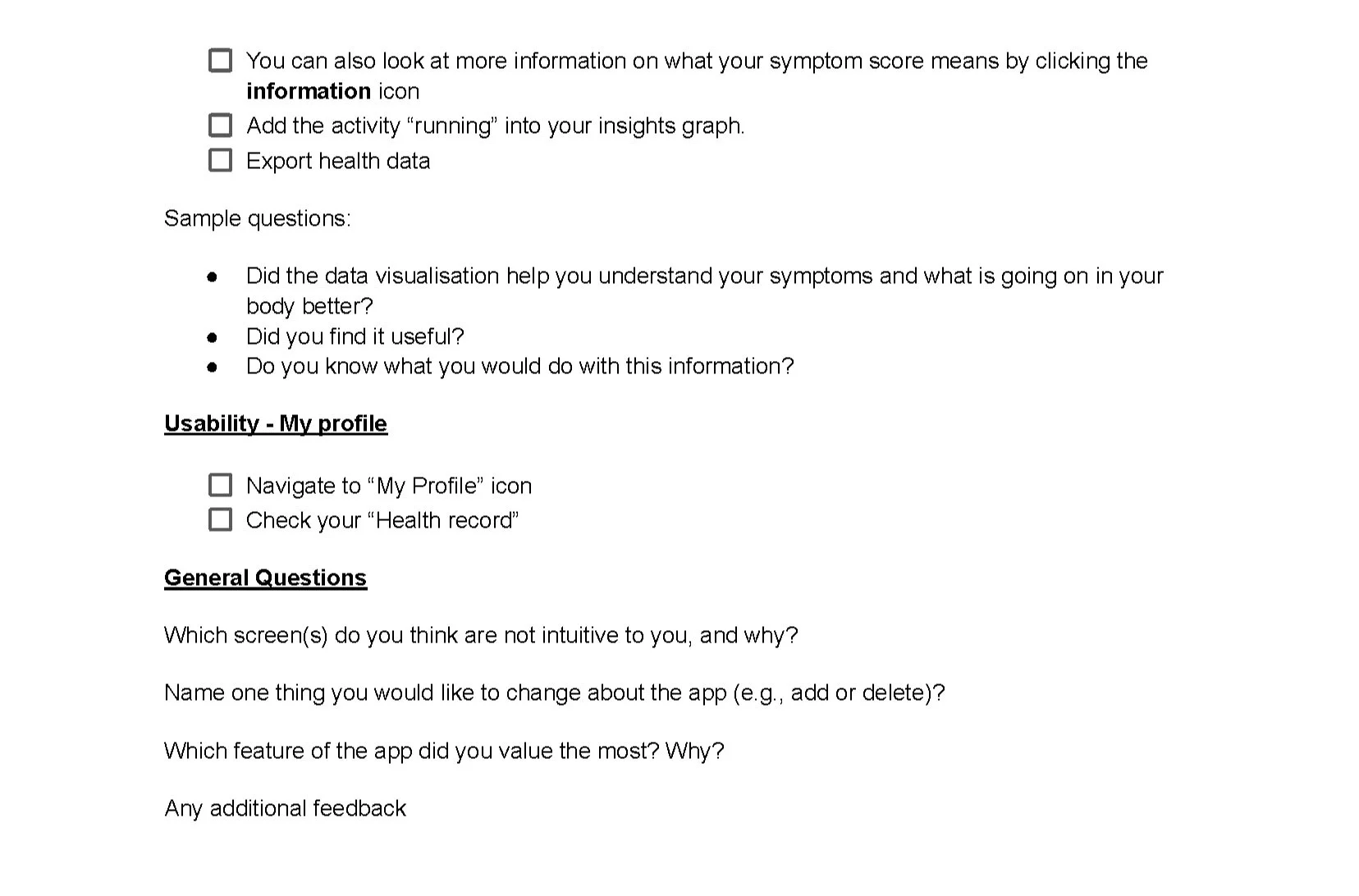
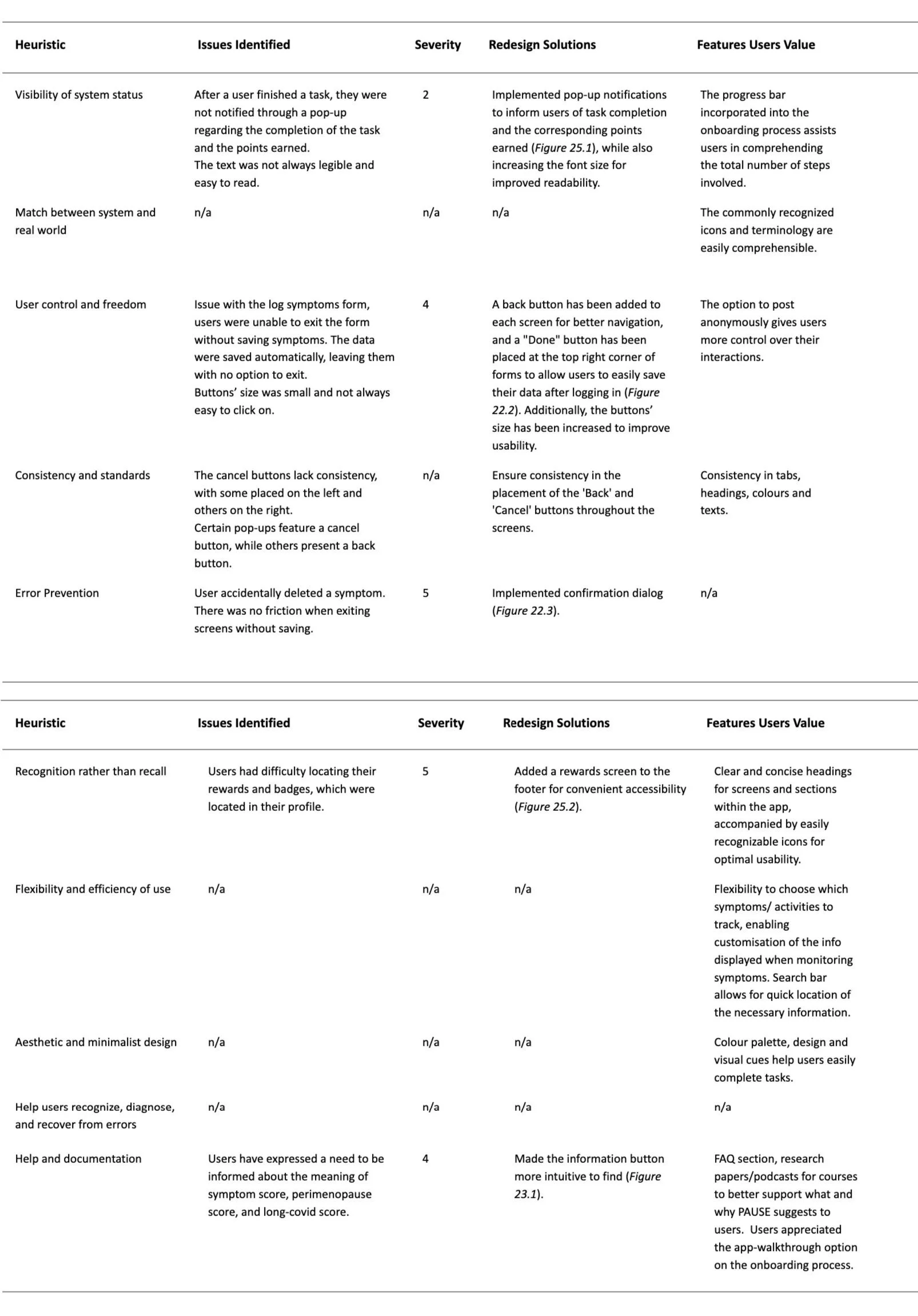
Our user test focused on high usability and user-friendliness of the PAUSE. We evaluated the overall interactive elements and user experience of the high-fidelity prototype, which guided the iterations of the final design.
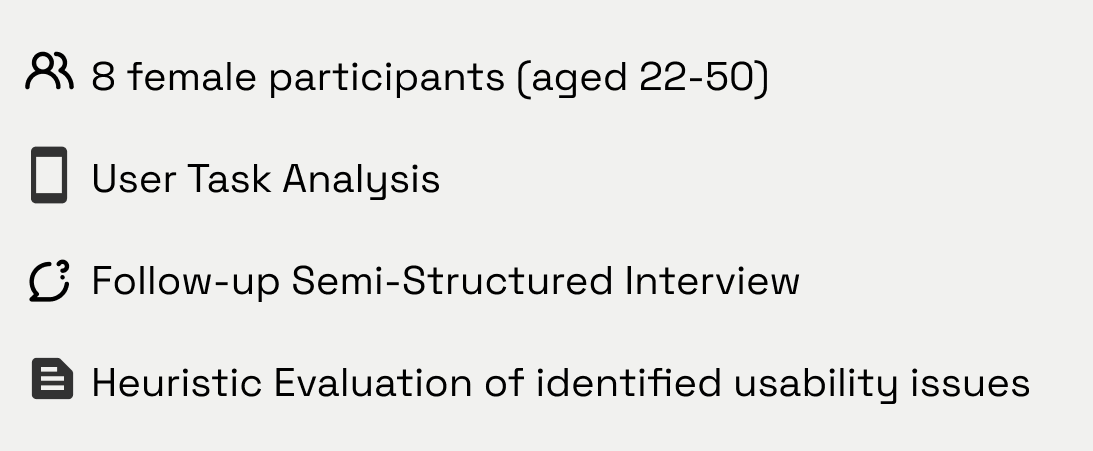
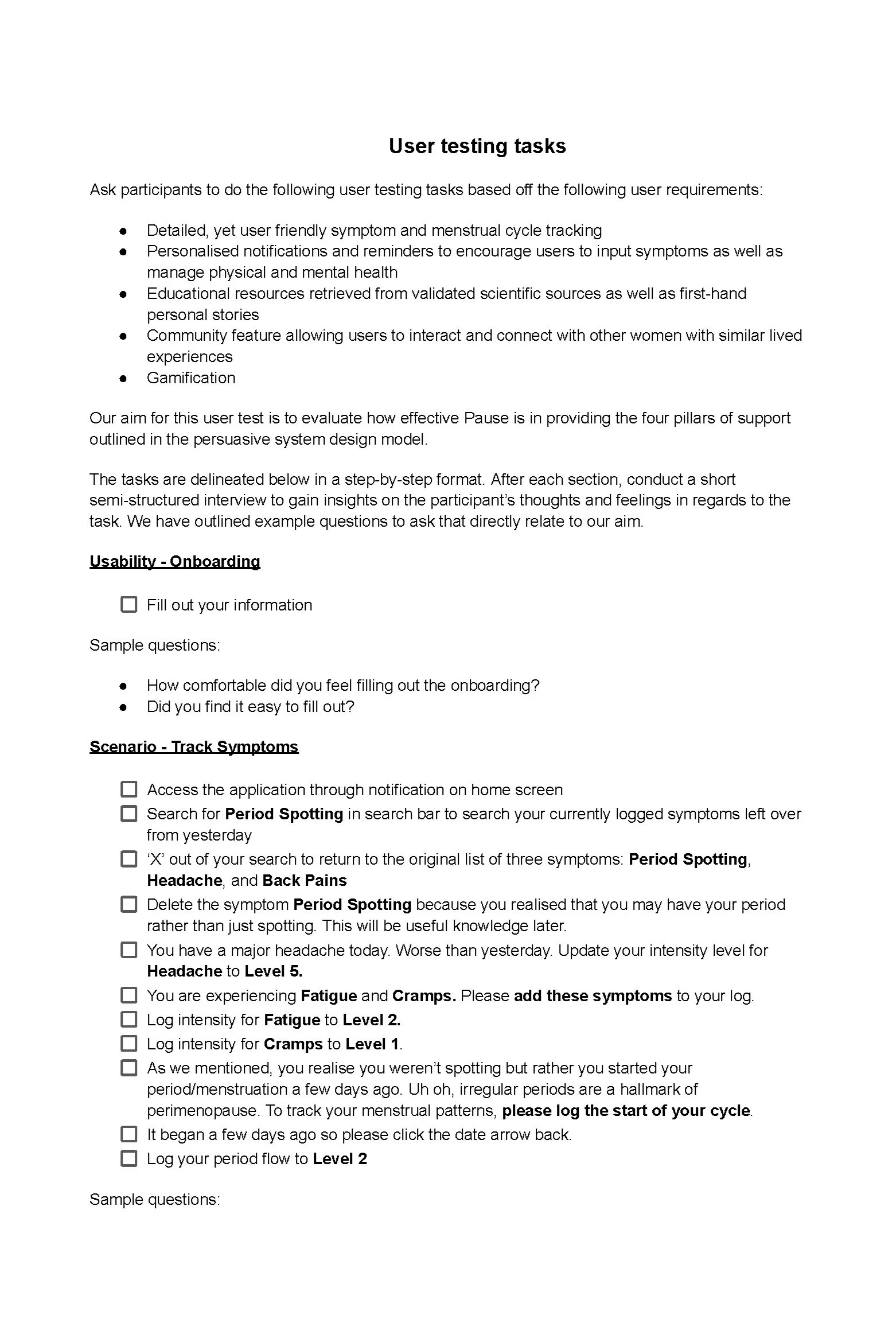
Heuristic Evaluation (severity score of 1-5)
Final Designs
My Learnings
Team work! Being able to trust each team member to execute and deliver quality work is the first step to achieving a mutual end goal.
Both work-streams were highly interdependent — constant communications and keeping each other in loop was very important.
More representative user insights could be achieved through recruiting larger group of participants belonging to the user group and longitudinal user studies (i.e., Diary studies).
When in doubt regarding design decisions, referring to user research insights, system design models, and AB testing provided effective guidance.